Sunday, February 23, 2014

Salt Trail Inobong Sub-station, Penampang to Tikolod, Tambunan Or Vice Versa


Salt Trail
Inobong Sub-station, Penampang to Tikolod, Tambunan Or Vice Versa


Trail Fee / Permit (Trip) (Per Person)
-          18 yrs & above
-          Below 18 yrs


30.00
12.00


80.00
40.00

Insurance ( Trip ) (Per Person / Per Day)
-          18 yrs & above


3.50

Guides Fee (Per Guide /  Per Day)
  • 1-3 Persons
  • 4-6 Persons
  • 7-8 Persons


42.00
45.00
50.00

Porters Fee (Per Porter / Per Day)
  • Per 10 kg
  • Each additional Kg


55.00
1.00

Safety Procedure & Identification Tag (Per Person)

2.00

Trekking Certificate (Per Person)


2.00
Personal Equipment

Visitors are request to bring the following equipment;
  • Good backpack , Sleeping bag  & raingear
  • Lunch box & spoon/chopsticks (for packed lunch)
  • Long -sleeve shirts/fleece,  additional cloths
  • A pair of good trekking shoes (leather trekking shoes are NOT recommended)
  • Towel,  sandal,  hat,  torchlight ,  swimsuit (for bathing at river) & personal medication

Tuesday, February 4, 2014

Salt Trails from Kg Tikolod Tambunan to Kg Inobong Penampang.

Have you ever heard about Salt Trails in Tambunan? It is located at Kg Tikolod. The Salt Trail is a route traditionally followed by villagers when taking their produce to the tamu (markets) on the west coast, and returning with salt and other goods. It is still the only access route to the remote villagers in the Park, especially in upper Papar river and Tambunan area.

The are 4 major routes which crosses Crocker Range Park. There are : Inobong-Terian-Buayan-Kionop-Tikolod trail, Tagudon-Kalangaan-Kionop-Tikolod trail, Mile 32 -Timpango Sugud trail Kuyongan-Longkogungan-Mile32 trail

But, tourist can now only walk the Inobong-Terian-Buayan-Kionop-Tikolod trail with guides, and stay each night in village homestays.

The total distance of the Inobong-Terian-Buayan-Kionop-Tikolod Trail is 34 km, and hikers are recomended to spend 3 days and 3 nights for the journey. The starting point is in Inobong sub-station which is about an hour drive from Kota Kinabalu via Donggongon road.It is located on the western tip of Crocker Range Park with an altitude of 1400 ft asl. First visitors have to climb up from the station to Mt. Kebambangan (2385 ft asl). The climbing is a bit hard work, but after arriving on the mountain ridge, most part of the trail to Kg. Terian is generally gentle slope. The highest peak is about 2630 ft located on the southern part Mt. Kebambangan which is still surrounded with thick forest. There is a suspension bridge which crosses the Terian river before arriving at Kg. Terian. The distance from the Inobong Sub-station to Kg. Terian is about 10 km with an estimated walking time of about 7 hours.

There is no bridge crossing the Papar river from Kg. Buayan to Kg. Kionop, therefore visitors have to cross the river. The best crossing site is the Lower junction of the Papar and the Kionop river from the north to the south side. Crossing the river is a real challenge when the water level is high after rain. The distance from Kg. Buayan to Kg. Kionop is about 5 km and estimated walking time of 3 hours.

The trail follows the Ponobukon river from the Kionop community centre to the tip of the ridge trail. Visitors have to cross the river several times. At the 22.5 km point from the Inobong station, the trail goes up to the main ridge which separates the west coast side and the interior plain area. Most part of the trail in Kionop is gentle but a part of the trail in Tikolod side is steep.The trail meets the Bolotikon river and follows until Kg. Tikolod passing by park boundary. Visitors will pass three shelters before ariving the Bolotikon river. The distance from Kg. Kionop to Kg. Tikolod (Bolotikon) is 13.5 km and estimated walking time of 7 hours.

Sample of Itinerary (More info at Journey Malaysia) :

Day 1 – Kota Kinabalu to Kg Tikolod to Molungung
~ Depart from Kota Kinabalu to Kg Tikolod (approx. 2 hrs)
~ Arrive at Kg Tikolod, welcome briefing &introduction
~ Equipment introduction &allocation
~ Safety briefing &expedition preparation
~ Commence trekking to Molungung Camp (approx. 1.5 hrs)
~ Arrive at Molungung Camp & camp set up
~ Lunch (packed lunch)
~ Free at own leisure
~ Evening meal
~ Night walk
~ Overnight stay at Molungung Camp

Day 2 – Molungung to Kg Kionop
~ Breakfast
~ Prepare for trekking
~ Trek to Kg Kionop (approx. 6-8 hrs)
~ Lunch (en route)
~ Arrive at Kg Kionop
~ Free at own leisure
~ Evening meal
~ Night walk
~ Overnight stay at Kg Kionop

Day 3 – Kg Kionop to Kg Buayan
~ Breakfast
~ Prepare for trekking
~ Trek to Kg Buayan (approx. 3-4 hrs)
~ Lunch (en route)
~ Arrive at Kg Buayan
~ Free at own leisure
~ Evening meal
~ Night walk
~ Overnight stay at Kg Buayan

Day 4 – Kg Buayan to Kg Terian
~ Breakfast
~ Prepare for trekking
~ Trek to Kg Terian (approx. 3-4 hrs)
~ Lunch (en route)
~ Arrive at Kg Terian
~ Free at own leisure
~ Evening meal
~ Night walk
~ Overnight stay at Kg Terian at a Homestay

Day 5 – Kg Terian to Kg Inobong Sub Station
~ Breakfast
~ Prepare for trekking
~ Trek to Kg Inobong Sub Station (approx. 7-8 hrs)
~ Lunch (en route)
~ Arrive at Kg Inobong
~ Equipment de-issue
~ Expedition review & certificate presentation
~ Prepare for departure
~ 3:30pm Transfer to Kota Kinabalu (Approximately 1 hour transfer time)

Location : Crocker Range National Park (88 km from Kota Kinabalu)
Trekking Distance : Approx. 34km 
Difficulty : Moderate

For those who love adventure trekking, this is suitable for you. More info please visit: http://sabahbah.com/activities/salt-trails-crocker-mountains-jungle-trekking/  /  https://www.journeymalaysia.com/rainsabahcrockerrange.htm or you can contact me as well at bosing1986@gmail.com. 


Thank you. 


Wednesday, July 3, 2013

Musim Menanam Padi Tiba Lagi..

Musim Menanam Tiba Lagi! 

Tambunan merupakan antara daerah pertanian di mana kebanyakannya masih lagi mengamalkan aktiviti bercucuk tanam. 

Majoriti penduduk di Tambunan mempunyai sawah padi dan mereka masih lagi menanam padi. Apa yang menariknya adalah kebanyakannya masih lagi mengamalkan cara pertanian tradisional walaupun terdapat beberapa proses yang mungkin telah dimodenkan seperti membajak sawah padi iaitu mengunakan mesin yang dulunya hanya mengunakkan kerbau. 

Walaupun Pesta Menuai baru sahaja berlalu iaitu pada 31 Mei 2013 (acara tahunan) , namun demikian sebenarnya di Tambunan, musim menuai adalah pada bulan Disember hingga Januari. Di dalam kesibukan perayaan Pesta Kaamatan di KDCA, di Tambunan, aktiviti membersihkan sawah padi sedang giat di lakukan kerana proses penanaman padi bermula dari bulan June dan Julai . 

Di Tambunan  pada masa ini, mereka sedang giat menanam padi dan antara perkara yang paling menyeronokkan adalah aktiviti 'Mitatabang' atau bergotong royong untuk menanam. Sekiranya anda melalui Tambunan pada masa sekarang, tidak hairanlah jika kawasan sawah kiri dan kanan terdapat banyak orang di sawah padi terutamanya di waktu pagi dan petang. Bagi yang ingin melihat cara penanaman padi di Tambunan, mungkin bolehlah anda melawat Tambunan pada masa sekarang. 

Untuk makluman bahawa Tambunan merupakan salah sebuah kawasan yang sangat sesuai untuk lokasi Photography. Kepada yang meminati Photography, silalah melawat Tambunan dan mengambil sedikit gambar. Disyorkan agar melawat sekitar bulan Jun hingga Disember iaitu ketika proses menanam padi bermula, proses
pembesaran padi di mana sawah-sawah padi akan menghijau, ketika padi sedang berbuah dan menguning dan seterusnya ketika proses menuai. Saya percaya suatu kepuasan akan dapat dicapai kerana terdapat perbagai aksi menarik yang boleh dirakam.

-Pihak Kami Ingin Mengalu-alu-alukan Kedatangan Anda ke Tambunan, dan untuk sebarang pertanyaan lanjut mengenai Tambunan, silalah berhunung dengan pihak kami dengan meninggalkan komen di ruangan komen. Terima Kasih- 

-Admin- 

Wednesday, January 23, 2013

Berhati-hati dengan Kerbau dan Sapi/Lembu di Sepanjang Jalan Tambunan

Di Tambunan, tidak dapat dinafikan bahawa Kerbau dan Sapi atau Lembu masih lagi berkeliaran terutamanya di di beberapa kawasan jalan samada jalan dari Kota Kinabalu menuju Tambunan , di kawasan selepas Kg Sunsuron  ataupun dari Keningau menuju Tambunan terutamanya kawasan selepas Kg Pupuluton Tambunan. 
 Bagi pelancong asing, mereka kagum melihat kerbau dan lembu yang dikira jinak namun bagi penduduk Tambunan terutamanya yang selalu mengunakan jalan tersebut, ianya mempunyai implikasi dari segi keselamatan. Jalan-jalan di Tambunan kebanyakannya gelap dan kadang-kala ada pemandu tidak sedar bahawa terdapat kerbau berkeliaran di tepi jalan raya dan mungkin akan mengakibatkan kemalangan. 
Oleh itu, berhati-hatilah di jalan raya dan sekiranya memandu ketika malam, sila perlahankan kenderaan anda dan sentiasa berwaspada sepanjang masa. 

Pandu Cermat, Jiwa Selamat!

Photo dari Pibabasan Do Lumpnaskitar Tambunan (Facebook) 

Saturday, September 29, 2012

Monoud - Proses menganginkan Padi Secara Tradisional


Monoud (Menganginkan padi) merupakan proses untuk memisahkan benih padi matang dengan benih padi yang kosong. Proses ini amat penting bagi memastikan padi yang akan diproses untuk menjadi beras tidak akan bercampur dengan padi yang tidak mempunyai isi. Proses ini masih dijalankan di kampung terutamanya kampung-kampung di pedalaman Sabah. Bagi memastikan proses ini berjalan dengan lancar, Kekuatan angin mestilah mencukupi bagi melancarkan proses ini. Menurut ibu saya, suatu ketuka dahulu, mereka bergantung dengan angin dan terdapat musim tertentu untuk proses ini. Menurutnya lagi, mereka mempunyai acara tertentu untuk memanggil angin seperti bersiul dan juga membakar serpihan kayu buruk. Menurut kepercayaan mereka, apabila angin diseru dengan cara yang sesuai, ianya akan datang. Pada masa sekarang, kaedah ini dipermodenkan lagi dengan memasang kipas samada kipas rumah mahupun kipas yang dipusingkan oleh enjin pemotong rumput ( Grass Cutter) bagi memudahkan dan mempercepatkan lagi proses ini.

Gambar diatas merupakan gambar hiasan semata-mata dan lokasi bagi gambar ini adalah dio Kg Kadamaian, Kota Belud.

Saturday, February 11, 2012

Tangon : Yanak-anak om ie Ongkor

Waro-waro kaka di gulu-gulu po id iso oh nokoiyonon di om, haro kaka iso paganakan do poingiyon, tama, tapa om tanak. Ie tapa nopo nga pinungaranan do ie Kaki-Kaki, ie nopo tama nga pinungaranan do ie Kodu-Kodu om ie nopo tanak diolo nga pinungaranan do ie Yanak-Anak.

Yolo nopo kaka'd ti do sanganak-anak nga monidong, mongulam om mananon nanom ngawi do kokotuan om ie ngawi taakanon do suai. Aparu tomod kaka yolo'd ti. Ie Yanak-Anak nopo nga tanakwagu di olumis tomod oh kokitanan om aparu, osonong ngawi oh kowoyo-woyoon.

Insan tadau, pimpanau no ie Yanak-Anak id tidong diolo. Id tawayaan nopo di Yanak-Anak di nga walai di Ligot Liou. Ie Ligot Liou nopo'd ti nga molohing no om oligot tomod oh liou, milo ngawi do pinturugan ie liou dau. Ie Ligot Liou nopo'd ti nga arahi tomod do posilang do parai, mutok tutok pondo ie Ligot Liou id suriba di bunahau do magandad di parai dau do oromuk."Talib oku po inan....""Erei, Yanak-Anak ko ie mala'd di.Mumbaya po boh, inggutuwan oku po.."

Umbaya nodi kaka Yanak-Anak di do minonginggutu di Ligot Liou. Soira sinoriyuk di Yanak-Anak ie tokobuk di Ligot Liou, atukoi... nouru tomod Yanak-Anak do nokotigog tu mogisusuwai po id tokobuk di Ligot Liou, haro no gangak, haro no lontugi, haro no tangkalamai, haro no giyuk. Tahan-tahanon po kaka di Yanak-Anak tu orosian do gokiyak. Siyahan no kaka di Yanak-Anak do manabpo ie tangkalamai, giyuk, lontugi om gangak om pokuwon no id palad di Ligot Liou. Soira do minsosodop nodi, ugad nodi Yanak-Anak.
"Yanak-Anak, tumakad ko nopo hilo id nuluhon om, umbayaan no ie tawadak, onuon ie tawadak di omulok po nga kada po ukabo id tanga do ralan. Korikot po id walai om ukabon nogi.""Pounsikou no inan," ka nogi di Yanak-Anak.

Soira do tuminakad ie Yanak-Anak do nulu, kokito no di Yanak-Anak ie tawadak di om onuo no di Yanak-Anak ie tawadak di omulok po miagal di pinonuhuan di Ligot Liou. Pitanggai tanggayai no di Yanak-Anak ie tawadak di do minongoi id todong om soira podi do nokouli Yanak-Anak id walai di sosodopon no, ukaboai nodi kaka di Yanak-Anak ie tawadak di. Soira do nukaban di Yanak-Anak ri, soliwan nodi oh sumandak di awantang om olumis tomod. Jodio nodi kaka di Yanak-Anak ie sumandak di do sawo. Aparu tomod kaka ie sumandak di om norikot no ie Kaki-Kaki om ie Kodu-Kodu do nondos. Ie nopo kaka ie sumandak di nga osundu ko tulun. Tok koi yom, kakaya nodi kaka yo Yanak-Anak di. Walai di nga osonong, binuru-buru di nga ogumu, parai di ngawi nga ogumu.

Soira nokorongou ie Ongkor do boros ngawi do tulun, ongoi nodi kaka yi Ongkor ruba di Yanak-Anak di om pongudiyo nodi nung poingkuro-kuro kopio do nakakaya. Yanak-Anak nopo'd ti tu osonong ko oh tulun nga posunudo nodi dau ngawi poingkuro kuro. Bah, ongoi nodi moti kaka yi Ongkor di pintalib-talib id walai di Ligot Liou. Soira do tuminalib, lohowo nodi di Ligot Liou yi Ongkor di do minoki'inggutu. Soira do sinoriyuk di Ongkor ie tokobuk di Ligot Liou, umbal po mala kaka ie Ongkor di pomogiyak tu nokokito do gangak, lontugi, tangkalamai om ie giyuk. Onuo no kaka di Ongkor ie mumuhau om pimuhawai no ie tokobuk di Ligot Liou gisom do sontompul-tompul po di ie tongogiyuk. Pinturugai ngawi kaka di Ongor ie tulu di Ligot Liou om norikot no ie Ligot Liou do rinualan do tulu.

Soira do minibok yi Ongkor, suhuo nodi di Ligot Liou do maganu do tuwa do tawadak di omulok po om sinunudan do au mongukab id tanga do ralan.Soira do naanu di Ongor ie tuwa di, au di yalo nakasabar do minongukab. Irikau nopo kaka yi Ongkor id disan di tawadak di nga ukabai no ie tuwa.. soira noukaban, soliwan nodi oh todu-odu no do aiso ngawi o nipon. Umbal di pomogiyak ie Ongkor nga poingkuro po, gusaan ie kaka di todu-odu no. Ie Yanak-Anak nopo di do sanganak-anak nga osonong di tomod oh koposi-posiyan diolo, ie Ongkor nopo di om, tadau-tadau nopo di do miuhod di todu-odu..

MANTAD: ORANG ASLI SABAH

Kirongulad Waterfall of Tambunan


When talking about Mahua Waterfall, most of you knows that the waterfall located at Tambunan. Have you ever heard about Kirongulad Waterfall? I heard from my father. He said that this waterfall is higher than Mahua Waterfall. This waterfall located at Kg Tikolod Tambunan. This picture (above) is a picture from my brother. What is your opinion?

Land Mark of Tambunan

Replika Halia ( Ginger)
Sompoton ( Traditional Music Instrument )
If you go to Tambunan, you may see this 2 very significant landmark. This land mark can be seen at the roundabout after SMK Tambunan high school ( route from KK to Tambunan ) and another one at the town .

Im not really sure about the real history but from what i heard from people, Sompoton is a traditional music instrument originally produce by Tambunan people. No need to go here just to see the sompoton because you can find the real sompoton at souvenir shop and music shop in Kota Kinabalu. Now, sompoton used as one of the music instrument in any musical event.

Ginger is a trademark of Kg Tikolod Tambunan because lots of people there plant Ginger.

( actually in need more info about this. I will come up with a long explanation later )

Tambunan Inn


Hi everyone, very sorry for a long break. Now i'm here again to rock and roll!

Now i want to share about Tambunan Inn. The only hotel/accommodation in the center of the town at the moment. Located in the middle of the town, surrounded with shop lots and restaurants.

Less that 2 minutes walk to Alliance Bank, and maybe around 2 minutes walk to Bus Terminal!

Room Rates: RM50-RM150

Useful Info:
Address :Lot E7, Block E,
SUDC Shophouses,
89657 Tambunan,
Sabah, Malaysia.
Phone :+6087 771240

Leave a comment if you have an inquiries!

Photo courtesy from Tambunan Inn Facebook! Ow ya, i hope, you guys can check the spelling "Internet" and "Package" .

Monday, January 31, 2011

Welcome to The 7-Lodge Tambunan


Need a break during your holiday? Looking for a place to stay with your family? friends? or with your love one?

This is the place to be, when you visit Tambunan. T7L offers you a comfortable and affordable accommodation in a friendly, homely atmosphere, an experience of a home away from home. Enjoy a cool night air and refreshing early morning air, listen to the forest birds singing, and if you are lucky you might see squirrels jumping from tree to tree, while having breakfast. Jungle trekking and camping site is available for the adventurous type. We also do prearranged climb to Mt. Trus Madi (2nd highest mountain in Malaysia) and sightseeing tours around Tambunan.

The 7-Lodge Tambunan (T7L) is located in Tambunan District of Sabah, The Land Below The Wind. It is 80km far from Kota Kinabalu City. T7L is fully managed by Tambunan Tours & Travel Sdn Bhd.

It takes less than 5 minutes drive from Tambunan Town. T7L is made up of two (2) separate buildings namely the SALANGAN REST HOUSE (4 rooms) and a Seven room building, hence the name THE 7 LODGE, with Reception Counter and Cafe. For more info, please visit http://7lodgetambunan.com/ or find them through Facebook: The 7 Lodge (please click)


Thursday, January 28, 2010

Gunung Wakid

Pic from http://eguana19.blogspot.com/

Gunung Wakid adalah gunung yang tertinggi di kawasan daerah Tambunan. Gunung wakid terletak di kampung Sunsuron, Tambunan dan mempunyai ketinggian kira-kira 2,000 meter dan dikeliling hutan tebal yang menghijau.

Tuesday, January 26, 2010

The View of Tambunan

This is part of Tambunan View.. Beautiful.. i took this picture while i'm on my way from KK to Tambunan.. Sunsuron View
Standing at the top of the hill.. another part of Tambunan
Part of Tambunan.. Mukim Nambayan View..
Wild Ches nut, Hazel nut.. What ever.. we call it Kogopon.. Wild fruits..only found at Tambunan.

Wednesday, November 25, 2009

Barait - Traditional Bag

Barait, bolehlah juga dikatakan sebagai Beg Tradisional untuk kaum KadazanDusun & Murut kan. Barait mempunyai pelbagai kegunaan terutamanya untuk mengangkat barang-barang. Barait bolehlah juga dikatakan sebagai Beg Serbaguna untuk Kaum KadazanDusun & Murut suatu ketika dulu.

Barait diperbuat daripada kulit rotan khas yang tumbuh berhampiran dengan anak sungai. Rotan tersebut dihiris-hiris dalam saiz yang dikehendaki sebelum dianyam. Saiz Barait ditentukan mengikut kepanjangan rotan yang dihiris, dan jumlah rotan yang dihiris. Proses pembuatan Barait mengambil masa lebih kurang 3 hari hingga seminggu. Proses pembuatannya bukan lah mudah dan hanya orang-orang tertentu sahaja yang mempunyai kemahiran.

Terdapat beberapa kegunaan Barait. Antaranya adalah:
1. Untuk mengangkat hasil tanaman seperti halia, jagung, Gorouk, Tawadak dan sebagainya
2. Untuk mengangkat hasil buruan seperti Bakas, Kijang, Tomuning, Bulukun dan sebagainya.. wahhhh...
3. Paling penting, untuk membawa KOKORUI and Water atau Lihing mau p Kebun..
4. Dan banyak lagi la.. haha

p/s: sapa2 nda paham tu certain perkataan.. tanya saja sia..!

Belum pernah lagi sia nampak student bawa barait p sekolah.. moga2 Barait dikormesialkan sebagai Beg Sekolah.. haha

Wednesday, November 18, 2009

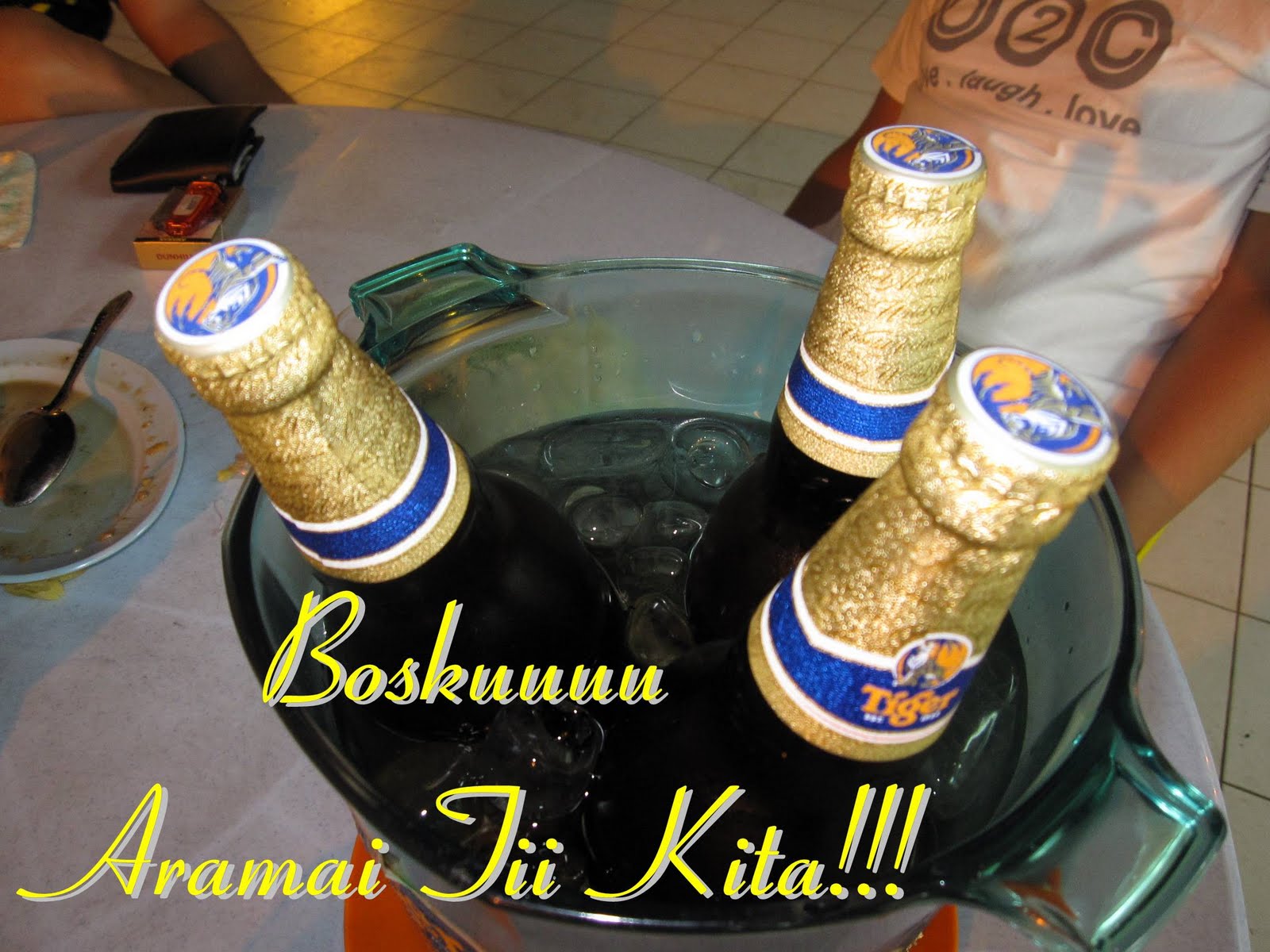
Haus ni! Minum Tiger Kita

Mari kita serang Kadai Murut si Taman Penampang. RM20 untuk 3 Butul. haha.. sadap ni..jangan malu2..

Watu Minoru - KadazanDusun Telemovie

Watu Minoru : Babang Pibabasan The Making Of...


Di sekitar penggambaran telemovie Watu Minoru : Babang Pibabasan.

Sinopsis:

Telemovie ini berlatarkan kisah di zaman lampau ketika tanah Borneo belum dijajahi oleh kuasa luar. Ia berkisarkan kisah sebenar iaitu pada suatu masa dahulu, orang-orang Dusun saling tidak bertolak-ansur sesama sendiri dan berpecah-belah kepada puak-puak. Mereka tidak akan bergaul dengan puak-puak lain walaupun sebangsa kerana masing-masing ingin menjaga kawasan yang mereka duduki. Tidak kurang juga niat merampas kawasan puak lain. Setiap kali ada pertembungan, akan berlaku perang yang meragut nyawa malahan kepala juga dipenggal. Apabila cinta berputik di antara dua insan yang datang dari puak yang berlainan, ia menimbulkan rasa tidak puas hati sesetengah pihak dan mencetuskan pertelingkahan yang tidak boleh dielak lagi memandangkan ia merupakan pantang terbesar setiap puak. Sampai bilakah persengketaan ini berterusan? Bagaimanakah kesudahan cinta terlarang itu? Sampai bilakah berperang sesama bangsa?

Monday, November 16, 2009

Siopon The Making!

Sebelum memulakan kata bicara, gambar ini original dari halaman web yang ganteng iaitu: http://sioponkeningau.blogspot.com yang mengisahkan tentang pria2 yang ketandusan alkohol.. haha: pada suatu petang yang indah.....

Traditional Brewed of KadazanDusun! its called SIOPON.. Lets see.. how its work.!

Yo! what you need is some Timadang @ Tarap leaves, tapi d kg Albert guna daun beringin. itu kaitu? sama laitu.. buli juga..Elakkan daripada menggunakan daun Getah! haha.. begetah giatu.. tak baik untuk kesihatan..


Put the leaves inside the Tajau, bukan pa.. mau kasi tutup tu nasi tapai.. supaya time kena tuang air, nda naik tu nasi dia.. kalau tutupan nda berapa mantap, maka, bila kana tuang air, daun pun naik juga.. so bilang c Sumpit, cucuk tu daun guna Garpu! Bosku! napa ko interprem, disana... adei..pigang2 babi hutan lagi ko ah..
Mesti buat dengan kesabaran dan berjimat cermat!.. oppsss.. napa tu butul Vodka ada kenampakan! cis.. tu yg bkin mabuk sia dat time.. i don't like! ( muka ku serius banar.. bikin panas)

bila suda siap semuanya, tuang air.. biarkan selama 30 minit debilang c Clay. Mantap sial.. tau juga ko ah. so bila suda sampai 30 minit.. masa untuk menjamu selera.. Power Gila!!! Pahit Manis.. 2 Thums Up sama tu urang tampat c bosku bli ni siopon..i like>>.. sadap banar.

Feed Back Daripada para pelanggan:

Albert Macho: Nda ku sangka bosku.. kau muntah di belakang kereta.. tapi nda pandai mengaku. sungguh mengerikan.. haha. sia ingat ko ni mainan siopon..tau-tau.. ko hancur di kandung tajau.. hahaha.. yeeee...

Kiuluman @ Clarence: Ko memang mantap syiall.. adakah buli gantung sampai jam 3!.. p kasi bangun urang yang sedang tidur lena.. sedang mimpi lagi sia tu. Salute bro.. sia mengaku kalah la kalau sama ko.. tapi satu sija la kan.. High Pitching katawa sampai hantu2 di alam fana ini pun takut.. haha.. kogutan dialoo.. haha

Sumpitz: haha.. tewas dalam kreta ah pitz.. macamana ni??? adaka banar ni? nasip nda muntah dalam kereta c bosku. bilang urang Tenom, bos Siopon.. haha..mungkin ko kejutan budaya dengan Siopon d tempat lain.. kakakakakakaka. erm, nda pa.. bideoman mantapz tu malam juga la.. haha

Bossing the Pro: Man of The Match.. nda pandai muntah.. haha.. opps.. minta maaf! tingu dri gambar buli tau suda. yoku boiti.. naavuk dialooo!!


P/S: Klik2 dlu nuffnang bah.. ekekekke


Wednesday, October 28, 2009

The Legend of Huminodun

"Unduk Ngadau" owes its origin from that part of Kadazandusun genesis story, which pertains to sacrifice of "Huminodun" – Kinoingan’s only begotten daughter. The legend went on to relate the following:

A long, long time age, the staple food of Kinoingan and his people was a type of grrain called "Huvong". One day, there was no huvong left to plant, nor other grains left for food. Kinoingan was so worried and felt very sorry for his people sufferings. It was said that Kinoingan sacrificed Huminodun, the only child to Kinoingan and Suminundu. She was the most beautiful maiden in her time, truly anyone who gaze at her lovely countenance would be transfixed and fall in love with her. She was also kind hearted and blessed with wisdom beyond her years.

Huminodun was willing to be a sacrifice and be an offering to the great earth so that there will be seeds once agaon for planting and there will be food for the people. Kinoingan was deeply saddened, but seeing that there was nothing else he could do to dissuade her, Kinoingan went ahead and cleared the land for planting. Through his supernatural powers, he was able to clear such a large area over many hills without any difficulty. When the time came for planting, Huminodun was brought to the cleared plot. As she was leaving, one cold hear the pitiful wails of great sadness from Suminundu, her mother. It was not at all easy for Huminodun to leave her mother and likewise her mother letting her only child go. The young men who had fallen in love with Huminodun could not let her go either. Indeed, they too cried and begged her to change her mid. However, there was nothing anyone could do, Huminodun had decided that her father’s people came before her.

When she arrived at the cleared plot, she turned to her father and said: "Father, you will see that my body will give rise to all sorts of edible plants for the people. My flesh will give rise to rice; my head, the coconut; my bones, tapioca; my toes, ginger; my teeth, maize; my knees, yams and others parts of my body to a variety of edible plants. This way never again will our people grow hungry to the point of dying."

"However," Huminodun continued, "Do follow these instructions of mine for it will guarantee us a bountiful harvest. When you have strewn parts of my body all over this clearings, do not come and see me for seven days and seven nights. When the padi has ripened, and it is time for harvest, do not start the harvest without doing this; take seven stalks of rice (padi) and tie them to one end of a spliced bamboo stick and them, plant this stick at the centre of the rice (padi) field. Only after this may you begin your harvesting activities. Later, place this bamboo stick with the seven rice (padi) stalks in the rice (padi) storage container (tangkob) when you bring it home after the harvest. For your first day harvest, do keep them in a big jar (kakanan). And, Father, do not give away your first year’s harvest because the grains may become bad. You can only give away your harvest to others in the second year." (That is why to this day, the Kadazandusun people do not give away their first years harvest.)

Kinoingan agreed to follow all her instructions. So it was that when Kinoingan sacrificed Huminodun, the whole world turned dark and there was awesome thunder and lightning.

That year, the people had never seen such a harvest. It was plentiful. Kinoingan had done as Huminudun instructed He also kept away the first day’s harvest in the kakanan and harvested the first seven stalks of rice from the rice plot. The seven stalks of rice represented Bambaazon, the spirit of the padi or rice.

As for the rice in the jar, the kakanan, on the seventh day a beautiful maiden miraculously stood up out of the big jar. She was referred to as Undul Ngadau, the spirit of Huminodun. It was said that this Unduk Ngadau was the one who instructed the first Bobohizan or Kadazandusun priestess in her prayers.

Therefore to this day, the Kadazandusun people have included the Unduk Ngadau Pageant as a grand part of their Kaamatan Festivals. It is a manifestation to the deep sense of respect and admiration that the Kadazandusun people have for the legendary Huminodun. It is a sacred title ascribed to Huminodun, to her absolute abedience to Kinoingam, so much so as to be a willing sacrifice for the sake of the father’s creation. "Unduk Ngadau" then is commemorative term in praise of Huminodun’s eternal youth and the total beauty of her heart, mind and body.

The term "Unduk " or "Tunduk" literally menas the shoot of a plant, which, in it most tangible description, signifies youth and progressiveness. Likewise, in its literal meaning, "Ngadau" or "Tadau" means the sun, which connotes the total beauty of the heart, mind and body of an ideal Kadazandusun woman. In essence therefore the "Unduk Ngadau" is a processual event of selecting from among the Kadazandusun beauties, one who would resemble the ascribed personality of "Huminodun".


Source: http://www.e-borneo.com/insideborneo/legend0007.shtml

Sunday, October 11, 2009

Jeruk Bambangan

Copied from: http://notecook.com/desserts/fruits/jeruk-bambangan/

This is a traditional appertizer for the Sabahan people especially for the Kadazan and Dusun tribe.

How to make Jeruk Bambangan

Bambangan is a well known fruit for the Sabahan people (Sabah, Malaysia) especially among the Kadazan and Dusun tribes. But nowadays, it is getting popular among every race in Sabah. The tree is very tall and it takes long years to mature and bear its fruits. The fruits are round and brown in colour. It has a nice smell when it is ripe. This fruit either can be eaten raw when it is ripe or turn it into Jeruk Bambangan, a local delicacies that can be a delicious appetizer.

A ripe bambangan can be very sweet or very sour depends on where the fruits came from. These are the simples’ steps to make jeruk bambangan.

The Ingredients:

1) A few fruits of Bambangan

2) Bambangan seeds

3) Salt

Step 1:

Peel off the bambangan skin. Be careful when doing this because the bambangan will produce sticky substances around it. This can burn your skin if you touch it with your bare hands so it is advisable for you to wear hand gloves. Any hand gloves will do. If you do not have hand gloves you can use any clothes to hold the bambangan while peeling it.

Make sure you do not wash the bambangan after you have peeled it because it will make it very slippery and that will make it hard for you to cut it into small pieces.

Step 2:

Cut the peeled off bambangan into small squares pieces making sure that it is not too small, just the right size. It also does not have to be at the same size. Do not throw away the seed. You need that as one of the ingredients.

Step 3:

Now just put aside the pieces of bambangan. Take the bambangan seed and you need to peel the outer layer of the seed. This can be a tricky thing to do because the outer layer is very hard but be careful not the cut the inner seed that is white in colour.

Step 4:

When you get the white seed, take any type of grater to grate the seed into crumbs. Grate all the bambangan seeds that you have, as much as you can.

Step 5:

Now take the bambangan pieces that you had cut earlier and mix it with the seed crumbs slowly, mixing them bit by bit. When you had mix all of the crumbs, add 1 to 2 table spoons of salt (or enough to taste) to the mixture and mix it all again. Leave it to be about half an hour before putting them in jars or containers.

Other people might have different ways to do this, but these are the basic steps that you can follow. Jeruk bambangan can last for quite sometimes because it tastes better as it gets older, but remember not to eat these too much at one time because it might gives you gastric. Enjoy!


Friday, October 2, 2009

Tuhau - Hot appetizer from Borneo rainforest.

Biggest Credit to Mr Dusun Aroma of http://www.sabahanfood.com/?p=40

I found this very interesting article. YOU SHOULD READ THIS..jarang2 ada yang rajin bikin ni.. hehe.. so i copied this one and share it to you.

Mr Dusun Aroma said:

On my very 1st post in this blog, I would like to share one of a dish that is a proud of my people. It is called sambal tuhau (too-how). Sambal is equivalent to a dipping sauce and tuhau is the main ingredient to make it.

By mentioning the name alone, it is already mouth watering! So, it’s a yummy yummy dish and it’s a hot one.

For those who don’t have any idea about tuhau, perhaps some light background information will help.

  • Sambal tuhau is a traditional side dish prepared by the natives in Sabah, especially by the Dusun who lives in the interior. It’s perfect to accompany local rice wine or beer and to treat hangover :).
  • Other cousins of tuhau which is use by many in preparing delicacy are tumeric, galangal/red ginger and of course wild ginger.
  • The main ingredient is the tuhau which is scientifically known as E. coccinea a plant from zingerberaceae family, grown wildly and abundant in our tropical forest. This is how it looks like :

2036239575_8bbff22750_o1

Photo credit to http://zainijimmy.blogspot.com

Alrite, enough said, lets go to the business! I’m gonna show you how to prepare the original sambal tuhau, the way we loves it so much in my home town.

**Before anything, in order to make a really good sambal tuhau, you must get the freshest raw ingredient possible. If you know where to get it green around your area, go get it pls.

Main ingredient:

A) Tuhau : any amount, but to make a medium bowl portion, get 8-11 stems

B) Lime : 5 – 8 (depends on your preference, but I use 5 large size limes). Rice vinegar can replace lime, but your sambal will be less than half good.

C) Chillies : 1 pack (contains around 35-45 chillies). It must be a hot chillies like Thai chillies or in Malaysia we have the Cili padi @ bird’s eye chilli (I use this one – mind blowing hot).

Optional (but better have :) ):

D) Onions : 3 medium size onions, thinly sliced.

E) Belacan / prawn paste / fermented prawn cake : Get a thumb size or more if you like. Give it a direct bbq for about 40-50 seconds till it produce slight burnt aroma. BUT don’t burnt it! Cut it into small cubicles or mash it with your pestle/mortar.

Ingredient for taste:

F) Salt : For this portion I use 3.5 tea spoons. Adjust the saltiness to meet your preference, but it should be a bit salty to cut the sour citric lime juice, and to awake the taste.

G) Sugar : 1.5 tea spoons or if you like, try monosodium glutamate (MGS) for 1 tea spoon. MGS is a famous flavor enhancer for Asian and the best brand is Aji No Moto which means ‘essence of taste’ (I use this one). Well, if you are a serious health conscious, you can forget about it :).

The process:

  1. 1st of all – clean everything.
  2. Peel off the hard tuhau skin by using a knife or your finger’s nail if you have a strong one. What we want is the soft inside of the stem. If you are not sure, try to bite a little, if it disintegrate easily with your chew, then it is. I use knife.

    pc1307871pc1307881

  3. Cut the tuhau into shorter sizes (10-15 cm). This is just technical add-on, so that it’s easier for the next step -.-“)
  4. Slightly mash the tuhau with the knife’s side, and then by using the reverse side of your knife (knife’s spine) hit the tuhau from end to end as if you are cutting it. But don’t cut it through. We want it still tangling lightly by its fibers.
  5. note the fine fibers attaching between those parts
  6. Once done, leave it rest to colorizes into light brown. But, never leave it too long, it will turn to dark brown. If you prefer it original color, you may dip it into your lime juice immediately.
  7. Cut the lime and extract the juice ONLY. The lime’s seed if mixed will turn the juice bitter and bitter and bitter. To get the most juice from your lime, roll press it under your palm and cut it properly. This is the right way to cut your lime, unless you are using lime juice extractor.
    create a triangle around the stem's end
    create a triangle around the stem
  8. Pluck the chilli’s pedicle/stem. Grind the chili using mortar grinder or blender/chopper.
  9. Properly mix together the processed A) Tuhau, B) Lime juice, C) Chilli, D)Onions E)Belacan, F) salt and G) sugar.
  10. The sambal is done!. Optionally, you may also add spring onions, garlic clove and even anchovies. Play with your imagination, make the dish yours :) and serve it best while fresh!

This is the end product.

pc1308072

And this is the mess :P

pc1308031

Sambal tuhau can be preserved for couple of weeks if kept properly inside a bottle/jar and refrigerated.

In Sabah, you can find the ready made sambal tuhau sold on the road side or in a market place, mostly in the interior such as in Tambunan, Keningau and Ranau. It taste slightly different as it is prepared using rice vinegar for a better preservative.

kundasang_rice1

Photo source :http://www.mount-kinabalu-borneo.com

Additional notes:

Not everyone would love tuhau though. I know a dozen who can’t even stand the strong smell of tuhau especially those who are not from Tambunan.

For the 1st timers who love to try, go for a very little amount and taste it around the tips of your tongue. If you feel ok with it, then proceed with more amount.

Another good way of tasting tuhau for the 1st timer is by having a small amount of it in your spoon and dip it into your soup and taste it. You will know if you are enjoying it or otherwise immediately. Mixing tuhau with noodle soup or maggie is damn good!, try it :).

pc150735pc150743

Tuhau in KK eateries?

It is very difficult to find but there is one outlet in centre point basement, (located beside the only vegetarian canteen) that provide sambal tuhau as their side dish. I was actually surprise by it.

However, it’s a bit frustrating though, the sambal tuhau in centre point is just too light. Perhaps the owner purposely make it very light for his customers.

If you are eating in Tambunan, go to Restaurant Trusmadi (besides TIPS and pasar), they still provide tuhau as a side dish for FREE and UNLIMITED. The food is nice too.

Hurmm, one last point.. beside being used to make an appetizer, tuhau is also a very good ingredient to make fish or chicken soup. I think that should be my next sharing :)

That’s it for now guys, cheers!

Some other post about Tuhau from the net:

http://jpajuni.blog.com/1705140/

http://zainijimmy.blogspot.com/2007/11/kampung-food-tuhau.html

http://www.dalbergpoulsen.com/ginger_poster.html

http://picasaweb.google.com/ng.wc.karen/Sabah2007#5180644762202429378

****

I would like to dedicate this post to the person who has made sambal tuhau popular in Tambunan and slowly it spread throughout Sabah. That man is my beloved father, Mr. Dalus Anggat.

I remember well, father used to serve his noodle soup with unlimited refill of tuhau and also a bottle of lihing – rice wine. It is still fresh in my mind, the combination really make a fortune for the family on those days.

****

Thanks again..